StrataPropertyServices.com / PRACTICAL GUIDE
How to Handle an Owner Who Won't Allow Fireplace Inspection
When an owner refuses access for a fireplace or vent inspection, here's how BC strata councils can use notice, bylaws, fines and the CRT fairly.
 StrataPropertyServices.com
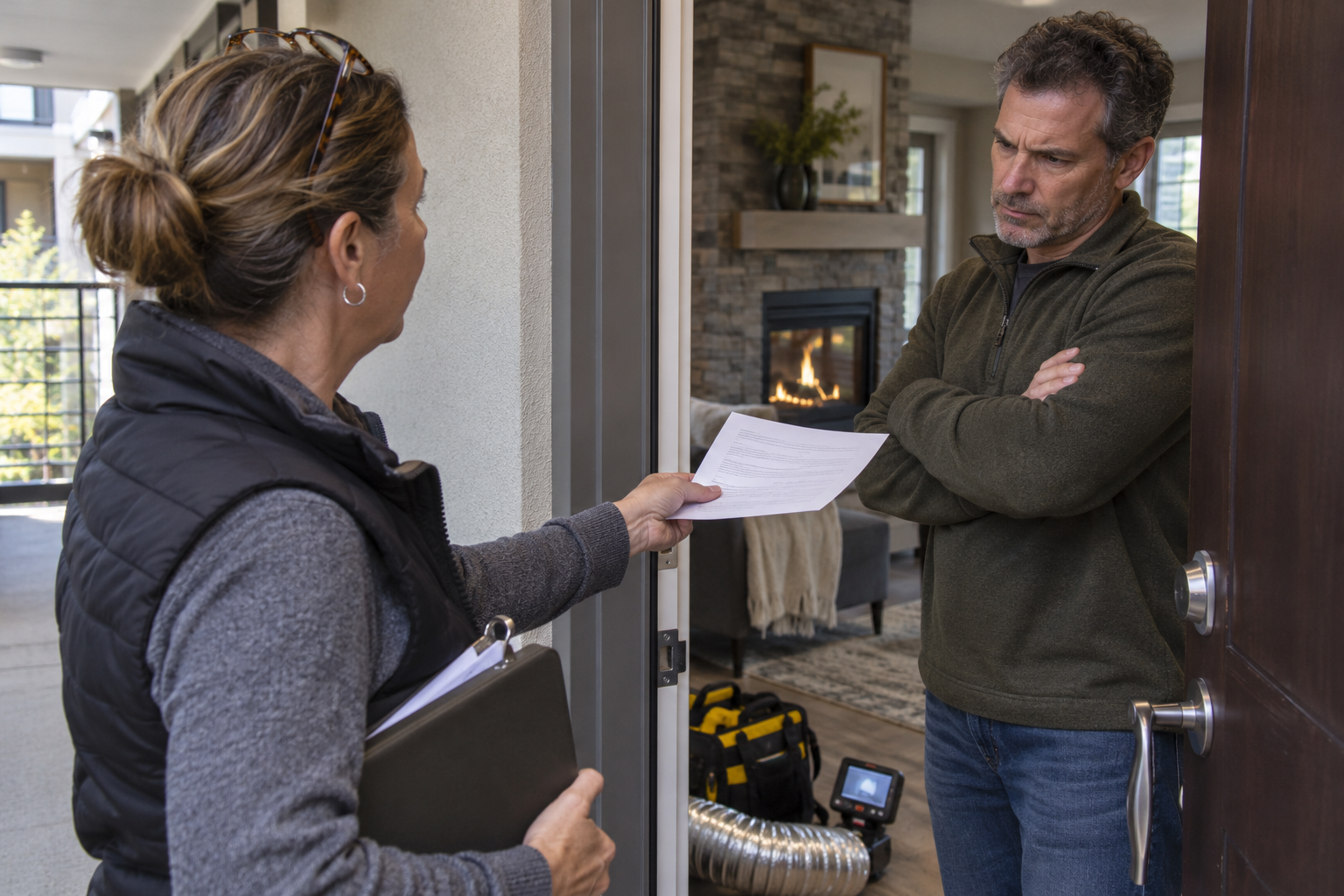
When an owner won't allow a fireplace inspection, a BC strata council should first confirm it has the right to enter for that purpose, then give proper written notice, try to resolve the concern directly, and only then move to bylaw enforcement or a Civil Resolution Tribunal (CRT) claim. Under Standard Bylaw 7, an owner, tenant or occupant must let a person authorized by the strata enter the strata lot at a reasonable time, on 48 hours' written notice, to inspect, repair or maintain common property, common assets, and parts of a strata lot the strata must repair, maintain or insure; in an emergency, entry is allowed without notice. The provincial government's guidance puts it plainly: owners don't have a right to refuse entry for those purposes once 48 hours' written notice has been given. The appropriate response depends on the documents, the reason for refusal and the remedy required. This is general BC strata-management information, not legal advice for a particular dispute.
Step 1: Confirm why the strata needs access
The strata's right of entry depends on what it's inspecting. Ask:
- Is it common property? Check the strata plan and applicable documents to establish whether vents, flues, chimneys or exterior terminations are common property and who must maintain them. Physical location alone does not settle responsibility.
- Is it part of the strata lot the strata maintains or insures? Your bylaws may make the strata responsible for certain fireplace components, or the strata may insure them under section 149.
- Or is it purely the owner's appliance? If the fireplace itself is the owner's responsibility and your bylaws don't give the strata a role, the strata's access rights for inspecting just the appliance are narrower.
Many building-wide programs inspect the appliance and the vent together, because a problem with one affects the other. Document which parts are common property and why the strata needs to see them. That clarity matters if the dispute escalates.
Step 2: Give notice that meets the bylaw
Notice problems are the most common reason strata access claims fail. Under the Standard Bylaws, written notice must include the date and approximate time of entry and the reason for entry. Check whether your strata has amended these requirements.
Check the current Act's notice-delivery and deemed-receipt provisions before calculating the notice period. Allow extra time where the selected delivery method requires it; do not assume sending equals legally effective receipt.
A good notice letter includes:
- The date and a realistic time window for entry
- The reason: annual inspection of fireplace venting and related common property
- Who will attend (the contractor's company name)
- How to reschedule if the time doesn't work
- A reference to the bylaw that authorizes entry
Step 3: Find out why the owner is saying no
Refusals usually have a reason, and many are easy to fix.
| Owner concern | What usually helps |
|---|---|
| Time doesn't work | Offer several windows, including an evening or weekend if the contractor can |
| Privacy or security | Allow the owner or an agent to be present; confirm who's attending |
| Fear of cost | Explain who pays for what under the bylaws, in writing |
| Recently serviced by their own technician | Ask for the service report; decide whether it covers the vent and common property |
| Tenant in the unit | Contact the landlord and the tenant; landlords are responsible for tenants' bylaw compliance |
| Distrust of council | Share the inspection scope and contractor details in advance |
Council should respond in writing and keep copies. If an owner offers their own technician's report, consider whether it covers what the strata needs to see, especially vent connections and terminations.
Step 4: Enforce the bylaw if needed
If proper notice was given and the owner still refuses, council can treat it as a bylaw contravention. The Strata Property Act sets out a process before fines can be imposed:
- Receive or note the complaint.
- Give the owner written notice of the complaint and a reasonable chance to answer, including a hearing if requested.
- Decide whether to impose a fine, give a warning or allow time to comply.
- Give written notice of the decision.
Under the Standard Bylaws, the maximum fine for a bylaw contravention is $50, and a fine can be imposed every 7 days for a continuing contravention. Many stratas have amended their bylaws to set higher maximums, so check yours.
A valid enforcement decision requires evidence of the applicable bylaw, the alleged conduct and the process followed. Another building's outcome does not establish that a fine is justified in your case.
Step 5: Ask the CRT for an order
Fines don't open a door. If access is essential, obtain advice about the appropriate forum and an order for the relief needed; many strata disputes fall within CRT jurisdiction. Expect the tribunal to look at:
- Whether the inspection relates to common property or parts the strata must maintain or insure
- Whether the notice met the bylaw's requirements
- Whether the strata offered reasonable times and alternatives
The Act can provide additional access rights in particular circumstances. Have the relevant provisions and relief reviewed for the actual dispute rather than treating a general example as a binding decision.
Emergencies are different
If there's a smell of gas, signs of fire, carbon monoxide alarms or water pouring from a vent, Standard Bylaw 7 allows entry without notice to ensure safety or prevent significant loss or damage. In a suspected gas or carbon-monoxide emergency, leave the affected area and contact the appropriate emergency responders from a safe location. Emergency access is about immediate safety, not catching up on missed inspections.
Preventing the problem next year
- Announce the inspection program at the AGM and in the minutes.
- Send notices well ahead, with several time options.
- Explain why venting inspections protect every unit, not just one.
- Consider, with legal advice, whether a bylaw requiring fireplace servicing with proof provided to council would suit your building.
Owners who want to understand what a technician actually checks can read the homeowner guides on our sister site Kongtractors. An informed owner is usually a cooperative one.
Treat the first response as a question to resolve
A refusal is not always a final position. Ask the resident to identify the concern in their own words and record it accurately. Someone who cannot attend the proposed appointment may be asking for rescheduling rather than disputing access altogether. Someone worried about pets or a vulnerable family member needs a practical discussion. Avoid labelling every missed appointment as obstruction before the facts are clear.
Give one contact person responsibility for responding. Conflicting messages from several council members can make an ordinary scheduling issue feel threatening. A concise written reply should acknowledge the concern, explain the inspection purpose and offer the next practical step. Do not promise that council will waive legal requirements, accept any substitute report or absorb every return-visit cost merely to end the conversation. Resolve what can be resolved and record what still needs a decision.
For example, a hypothetical owner works overnight and cannot accommodate the contractor's early-morning window. Council might ask whether an afternoon appointment, an authorized representative or another reasonable arrangement is possible. That is different from accepting indefinite delay. A documented effort to find a workable time helps establish what the actual disagreement is and can avoid unnecessary escalation.
Create an access-authority file before issuing threats
The manager should assemble the filed bylaws, relevant strata-plan information, insurance information where material and the inspection scope. Identify the specific property or component the strata proposes to inspect and the reason it falls within the asserted authority. The fact that an appliance burns gas is not itself a complete legal explanation for entry into a private home.
Separate three issues in the file: who owns the relevant property, who must maintain it, and what provision authorizes access for the proposed work. Those questions can overlap but are not identical. An alteration agreement may also be relevant. If the documents conflict or the boundaries are unclear, obtain legal advice before announcing a broad right of entry. Do not ask the contractor to settle a disputed property boundary at the doorway.
Section120 of the Strata Property Act makes the filed bylaw history important: the Standard Bylaws apply except where different bylaws have been filed. A template copied from another building cannot establish your building's current rule. Keep a dated copy of the materials reviewed so council can explain what it relied on if the owner challenges the notice.
Write a notice that describes the real visit
A notice should enable the resident to understand what will happen, not simply instruct them to be available all day. State the proposed date, an approximate time or meaningful window, the actual inspection purpose and the authorized attendee. Explain how the resident can contact the manager about access arrangements. A contractor's appointment reminder can support coordination, but it should not be assumed to replace the strata's required notice.
Distinguish inspection from additional work. If a visit might include cleaning, repairs or testing beyond the originally stated scope, describe that clearly and establish who can authorize it. Residents should not discover at the door that a brief visual inspection has become a different project. Equally, a contractor who identifies an urgent concern needs a defined escalation route rather than waiting for an informal group-chat decision.
For timing, calculate the required notice period from legally effective receipt, not from when a letter was drafted. The Act's service and deemed-receipt provisions can affect that calculation. Check the current provisions for the recipient and method used, and allow a sensible margin. Do not assume a door posting, ordinary email and personal delivery all start the same clock. Have uncertain service questions reviewed before relying on them for enforcement.
Keep inspection evidence and personal information proportionate
Ask the contractor to record the technical findings necessary for the program: which equipment or components were inspected, any limitations, defects and recommended follow-up. The report should not become a collection of unrelated observations about the resident's possessions or lifestyle. Set expectations for photographs and access to reports before the visits begin. Explain how residents can ask questions about information collected in their suite.
Council minutes should document decisions without publishing unnecessary private detail. A useful operational record might say that access for a specified lot remains outstanding and that the manager will issue a compliant follow-up notice. Publicly naming an owner as difficult or describing medical circumstances adds conflict without improving the inspection. Obtain privacy guidance where collection, disclosure or retention is uncertain.
Use a restricted access log with dates, delivery records, responses, appointments and follow-up decisions. Distinguish no answer, cancelled appointment, access refused, partial inspection and completed inspection. These outcomes mean different things. A contractor's invoice for an unsuccessful visit is not by itself proof that a resident breached a valid bylaw. Preserve the underlying record rather than relying on a summary created months later.
Consider an owner's existing service report carefully
An owner may say that their own technician has already serviced the fireplace. Ask for the report and compare its scope with the strata's legitimate inspection objective. It may address the appliance but omit a common vent, inaccessible connection or exterior termination. Conversely, it may provide useful evidence that avoids some duplicate work. Council should consider the substance rather than automatically accepting or rejecting it based on who booked the visit.
If a gap remains, identify it precisely. For instance, a report that records cleaning and ignition checks does not necessarily say anything about a component the strata needs assessed. Explain what additional information or access is required and why. Do not accuse the owner's contractor of poor work simply because their job had a narrower scope. Different commissions can produce different reports without either being dishonest.
Any decision to accept alternative evidence should be consistent with the building's obligations and advice received. Record the reason and any outstanding limitations. Council should avoid creating an accidental policy that a receipt alone always excuses access. The objective is adequate evidence and lawful maintenance, not defending one preferred contractor against every alternative.
Escalation should identify the remedy needed
If the dispute remains, ask what outcome council actually requires. Is it a confirmed inspection appointment, access to a particular common-property component, a technical report or a stop to an identified hazard? Frame further correspondence around that outcome. Threatening an expanding list of consequences without a clear request makes resolution harder and can distract from weaknesses in the original notice.
Before fines or other enforcement, follow the applicable complaint, response, hearing and decision requirements. Check current bylaws and law rather than copying the maximum fine from a general article. A standard fine ceiling, a regulatory ceiling and a chargeback for costs are different concepts. Do not describe an invoice as automatically recoverable or add it to an owner's account without checking authority and required process.
Where an order is needed, legal advice can help identify the proper forum, evidence and urgent options. The Civil Resolution Tribunal deals with many strata disputes, but the appropriate route depends on the relief and circumstances. A predicted tribunal win is not an access plan. Keep trying reasonable scheduling solutions while preparing the necessary evidence, unless professional advice or immediate safety requirements dictate otherwise.
Do not convert routine refusal into an emergency
A missed annual appointment does not become an emergency merely because the contractor is already on site or a program deadline is approaching. The emergency exception concerns actual safety or significant loss or damage. Record the information supporting any urgent response and involve the appropriate emergency responders. Council should not use an emergency label to bypass a disputed ordinary notice.
Likewise, do not interpret a statutory or bylaw access right as general permission to force a door or change locks. How disputed access can lawfully be achieved requires case-specific advice and, where appropriate, an order or emergency response. Keep contractors out of confrontations. Their task is technical work within authorized access, not deciding whether a resident's legal objection can be physically overridden.
If gas is smelled or a carbon-monoxide alarm sounds, leave the affected area and follow emergency directions. Call emergency services and the relevant gas emergency service from a safe location as appropriate. Do not delay an urgent safety response while council exchanges messages about the next meeting. Once the immediate incident is managed, preserve an accurate record and arrange qualified follow-up rather than assuming the routine inspection program has resolved it.
Close the file with evidence of completed work
A successful resolution is more than an owner agreeing by email. Confirm that the required inspection actually occurred, record its scope and deal with any outstanding defects or access limitations. Send the resident the relevant next steps in plain language. If another visit is required, begin a new clear scheduling and notice process rather than relying indefinitely on the original letter.
After the program, review what caused avoidable friction. Were windows too broad? Did notices explain common-property responsibility? Could the contractor identify themselves clearly? Were residents given one dependable contact? Improve those operational details before proposing broader enforcement powers. An orderly process protects the building and residents while producing a defensible record of the work council actually needed to complete.
Frequently asked questions
Does Standard Bylaw7 authorize every fireplace inspection?
No. Check the filed bylaws and whether the proposed purpose concerns property or components within the applicable access authority. The appliance being gas-fired does not by itself settle that question.
What does ordinary entry notice under Standard Bylaw7 require?
The default provides for reasonable-time entry on 48 hours written notice with the date, approximate time and reason. Confirm amended bylaws and legally effective service before calculating the period.
Can council force entry after a missed appointment?
Do not treat a missed appointment as permission to force entry. Obtain case-specific legal advice about disputed access and any appropriate order; genuine emergencies require a separate immediate safety response.
Can the manager impose a fine automatically?
No. The applicable complaint, response and council decision process must be followed, with any fine authorized by current law and the strata bylaws.